A safe space to explore, express, and grow.
Children don't always have the words to explain what is happening inside them. But they communicate constantly — through behavior, play, imagination, movement, relationships, and sometimes through silence.
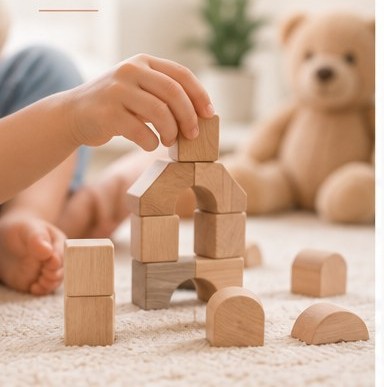
Play Therapy gives children a developmentally appropriate way to express and explore experiences that may be difficult to communicate verbally.
Play is a child's language
Adults often process experiences by talking about them. Children frequently process through play. Within a safe therapeutic relationship, play can provide opportunities for children to express emotions, explore relationships, practice problem-solving, develop emotional awareness, and experience greater mastery and confidence.
Rather than focusing only on stopping a behavior, we become curious about what the behavior may be communicating.
Looking beneath the behavior
A child who becomes angry may be overwhelmed. A child who refuses may be trying to regain a sense of control. A child who withdraws may be protecting themselves. A child who appears “too sensitive” may simply experience certain situations more intensely.
Understanding doesn't mean eliminating boundaries or expectations. It means responding to behavior with a clearer understanding of what may be happening underneath it.
Parents are part of the process
Children don't exist separately from their families. When appropriate, I work collaboratively with parents to help them better understand their child's emotional world, recognize patterns, strengthen connection, and respond in ways that support both regulation and healthy development.
The goal isn't to create a perfectly behaved child. It's to help a child develop the capacity to understand themselves, express themselves, connect with others, and grow.